
The most expensive time tracker is the free one.
Clockify costs a few dollars a seat. The hours nobody remembers to enter cost far more. Clockify's auto tracker records your apps and leaves the entries to you. Timely drafts them, and doesn't need to watch anyone to do it.

What Clockify gets right
Clockify packs a long feature list into a low price, and millions of people use it. Its screenshots stay off until an admin turns them on.
- Invoicing and timesheet approvals from its Standard plan
- ISO 27001 and SOC 2 Type II certification
- Browser timers inside more than 90 web apps, such as Asana and Trello
A low price stops us counting
When something costs next to nothing, we stop weighing what comes with it. For a time tracker, the bill that matters is the hours it misses, and those never show up on anyone's invoice.
Free has also gotten smaller. Since April 2026, Clockify's free plan covers up to 5 people and can no longer mark hours as billable.
And the upgrade path leads to watching. On Pro, Activity Monitoring is an always-on agent with productivity rules and a utilization score that admins see and the people measured don't. Screenshots are optional. Clockify's auto tracker records your apps privately, but every entry is still yours to make.
An example day of 6h 30m. In Clockify: 6h 30m of app activity, still to be turned into entries. In Timely: 6h 30m drafted across 3 projects, ready to check and submit.
Timely changes the default
In Clockify, the default is a blank timesheet and a list of apps to sort through. In Timely, the default is a draft, and nobody is watching.
Memory records the day
The Memory app notes the apps, documents, sites, and meetings you work in, privately, on your Mac or PC. Nobody else can see it, admins included.
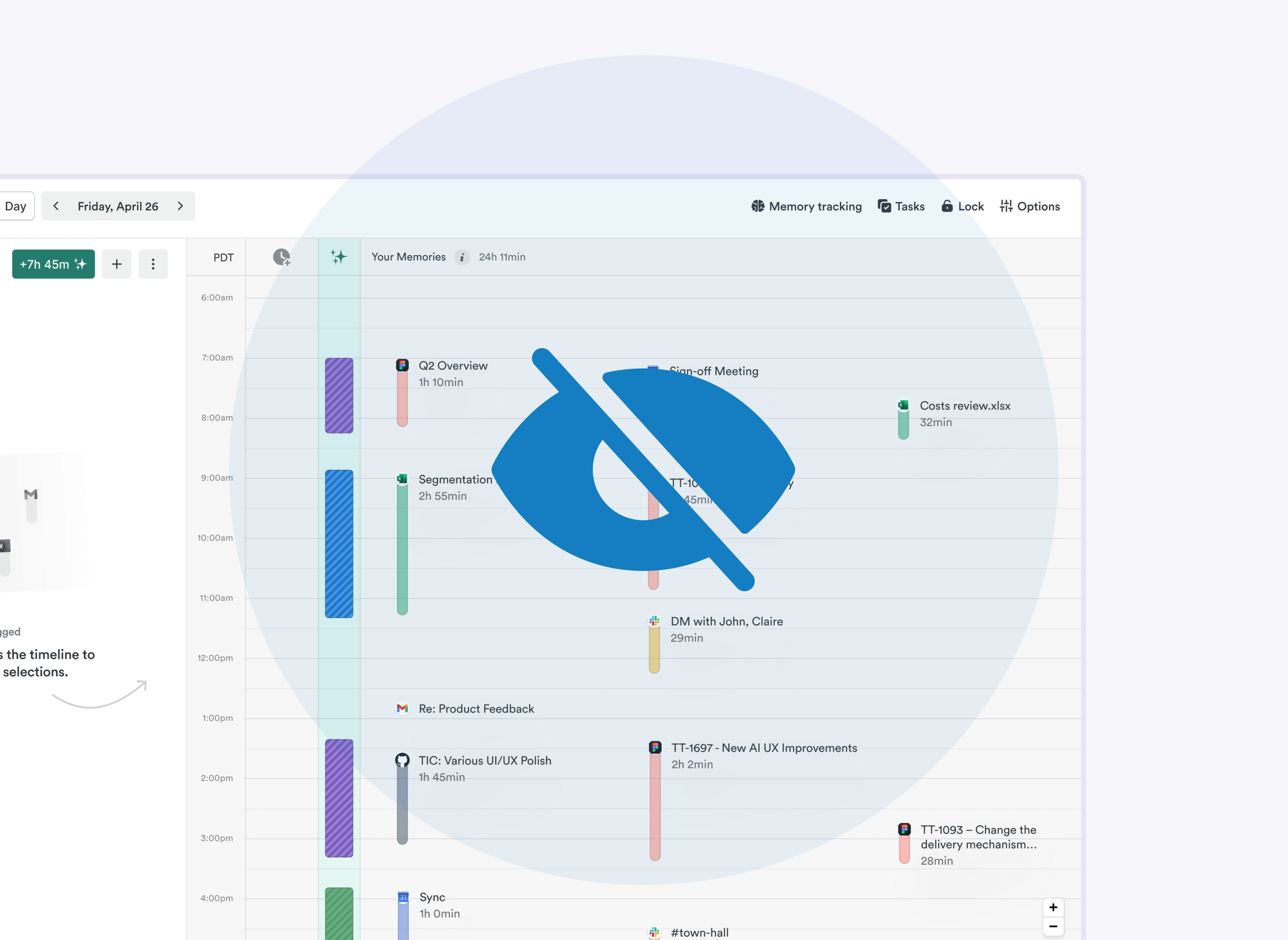
AutoSheet drafts the timesheet
Each morning, AutoSheet turns yesterday into a draft: projects, hours, and notes, linked to the work behind them.

You check it and submit
Fix anything that looks wrong and submit. Nothing reaches the shared timesheet until you do.

From people who moved on from Clockify
I liked Clockify but found I would forget to start timers or forget to end them. I also didn't have as much detail about what I did during that time as I get from Timely.
Clockify wasn't user-friendly. Timely is a lot easier to use, the interface makes it enjoyable to use and the customer service has been outstanding! Truly a tool worth paying for.
What each price buys
Timely costs more per seat than Clockify. Prices are per person a month, billed annually, with the monthly price in parentheses.
| Pricing | Clockify | Timely |
|---|---|---|
| Cheapest paid plan | $3.99 on Basic ($4.99) | $9 on Starter ($11), up to 5 people |
| Approvals and invoicing | $5.49 on Standard ($6.99) | $16 on Premium ($20), invoices sent through QuickBooks Online |
| Project budgets | $7.99 on Pro ($9.99) | Every plan, from $9 |
| Activity monitoring and screenshots | Offered on Pro | Not offered on any plan |
Checked on . Source: Clockify pricing page.
Timely vs Clockify, feature by feature
Every row checked against Clockify's own website. We've marked where Clockify wins, too.
| Feature | Timely | Clockify |
|---|---|---|
| Capturing time | ||
| Captures work automatically, no timer | : Memory app for Mac and Windows | : Auto tracker in the desktop app, off until you start it |
| Drafts your timesheet for you | : AutoSheet drafts each day for you to check and submit | : You turn auto tracker records into entries yourself |
| No screenshots, keystroke logging or productivity scores | : On every plan | : Pro offers activity monitoring and screenshots, off until an admin turns them on |
| Activity private to the person | : Admins can't see anyone's Memory | : Auto tracker is private; Activity Monitoring is visible to admins |
| Approving and billing | ||
| Timesheet approvals | : Premium and up, built with time entry states | : Standard and up |
| Locked time | : Unlimited plan | : Standard and up |
| Billable rates | : Basic and up | |
| Project budgets | : Recurring budgets on Premium and up | : Pro and up |
| Invoicing | : Draft invoices sent through QuickBooks Online, Premium and up | : Standard and up |
| Planning and reporting | ||
| Planned vs actual time | : Premium and up | : Scheduling, Pro and up |
| Capacity planning | : Logged and planned time against capacity, Unlimited plan | : Team capacity in scheduling, Pro and up |
| Utilization reports | : Unlimited plan | : No dedicated report; scheduling shows utilization on a timeline |
| Practicalities | ||
| Free plan | : Up to 5 people, no billable hours | |
| Free trial | 14 days: No card needed | 7 days: Pro features, no card needed |
| Price from, per person a month | $9 annually, $11 monthly: Starter: up to 5 people and 20 projects | $3.99 annually, $4.99 monthly: Basic |
| Security certification | ISO 27001: No SOC 2 | ISO 27001 and SOC 2: SOC 2 Type II, listed by parent company CAKE.com |
Move from Clockify
There's no Clockify importer, so bring what you need by CSV or start fresh.
Decide what to bring
Many teams start fresh with their current clients and projects. If you want your history, export it from Clockify as CSV files, which needs a paid Clockify plan.
Import with CSV
On Premium and up, an admin imports people, projects, tags and time entries from CSV files. People and projects go in before time entries.
Install Memory
Each person installs the Memory app on their Mac or PC. AutoSheet drafts their first timesheet after a day of work.
Questions about Timely vs Clockify
Clockify is cheaper. Why pay more?
Clockify costs less per seat, and if your team enters every hour reliably, it may be all you need. Timely costs more because it drafts each person’s timesheet from the work they did, so fewer hours depend on someone remembering. Try it for 14 days and compare what each tool records.
Clockify's auto tracker records my apps. What's different?
Clockify's auto tracker records the apps and sites you use, privately, on your computer. It doesn't add them to your timesheet, so you turn records into entries yourself. Clockify lists an AI tracker as planned on its roadmap. Timely's AutoSheet drafts the whole day for you to check and submit.
Can I bring my Clockify data?
Yes, with CSV import on Premium and up. An admin can import people, projects, tags and time entries. Clockify's CSV export needs one of its paid plans. Or start fresh and let Memory capture your work from day one.
Does Timely take screenshots?
No. Memory never records keystrokes, screenshots or audio, on any plan, and there's no productivity score. Your Memory is private to you, and admins can't open it. They see the timesheet you submit.
Does Timely send invoices like Clockify?
Timely builds draft invoices from billable hours on Premium and up and sends them to QuickBooks Online, where you send them to clients. Payment status comes back to Timely. Clockify creates invoices itself on its Standard plan.
Is there a free plan?
No. Timely has a 14-day free trial with every feature, and you don’t need a card to start. Clockify’s free plan covers up to 5 people.
See which hours you’ve been missing
Fourteen days, every feature, no card. Compare the hours Timely drafts with the hours your team enters today.